

Drought in Catalonia and the rest of Spain
The extreme drought Catalonia is suffering is the worst in the last century since rainfall records began. Catalonia has had more than 3 years of below average rainfall, and the local authorities had announced that an emergency would be declared in the most populated areas if the level of the reservoirs that store water for the driest months fell below 16%, which has happened in recent days.
Because of this drought, three emergency phases have been established, each setting a maximum water allowance per person per day: Emergency I up to 200 l per person per day, Emergency II 180 l per person per day and Emergency III 160 l per person per day.
This intense drought in Catalonia could spread to other regions such as Andalusia, where they have already warned that if it keeps not raining they will have to impose restrictions, and they do not rule out having to resort to tanker ships.
Spain is on the front line of climate change and is seeing extreme weather events multiply, particularly heatwaves.
Restrictions on Catalan industry
In industry, and with the aim of saving water, other measures have also been introduced. The greatest restriction falls on agriculture, whose irrigation is cut by 80% under the state of emergency. Only “survival irrigation” can be authorised for woody crops. Water use in livestock farming will be reduced by 50%.
Restrictions will be somewhat more lenient for industrial and urban uses, which face only a 25% reduction in water consumption. According to the estimates made, the chemical industry and paper mills are the sectors that consume the most water in their production. At the same time, local councils can impose further bans at their sports facilities, whether public or private, and at other leisure venues. Each town can also apply different water saving measures, as set out in its drought plans.
ARI sustainable solutions
At ARI we are committed to sustainability and to water reuse in industry, which is why we advise and help our customers achieve greater energy savings in their processes while also achieving greater sustainability in line with climate change.
To ease this drought situation we have equipment such as ARI CORsys, specially designed so that steam users in industry can recover all the condensate generated in their processes, avoiding water being wasted during operation.
The steam used in industry loses pressure as it condenses after the production processes. This means the condensate cannot return to the boiler house, so it is lost and, as a result, a great deal of water is wasted.
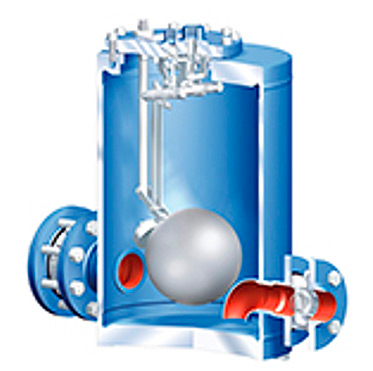
At ARI Armaturen we have managed to correct this with the ARI CORsys, system, which collects the condensed steam generated by the production processes using our condensate pump ARI CONLIFT, which, by injecting high pressure steam, is able to pump this condensate back to the boiler house, avoiding wasted resources.
This process saves large amounts of water in industries where operations never stop and there is a risk of wasting a great deal of resources. In this way it not only helps save water in response to the drought, but the company also reuses its resources, optimising its operations.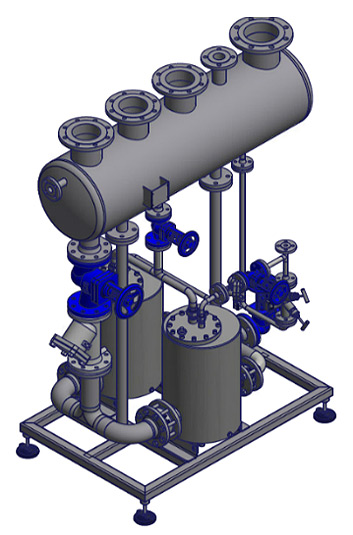
Request a study of your plant with no obligation; our experts will be delighted to help you.
961 479 011